






AI systems / research / infrastructure

samiel azmaien.

Portrait of Samiel Azmaien
SUBJECT_001 GEORGIA TECH
Scroll
00 / SIGNAL

Building for
the machine layer.

I'm a computer science student at Georgia Tech, developing software for AI agents.

My interests include, but are not limited to, building agent-facing infrastructure, adversarial modeling, evaluating models for machine learning, GPU memory allocation problems, and machine learning applications.

Georgia Tech CS GPA 4.00 Atlanta, GA
SIDE CHANNEL / ORIGIN → NOW

The journey.

00 / THE FIRST SIGNAL
Samiel in motion beside a lit bridge at night
01 / BAY BRIDGE
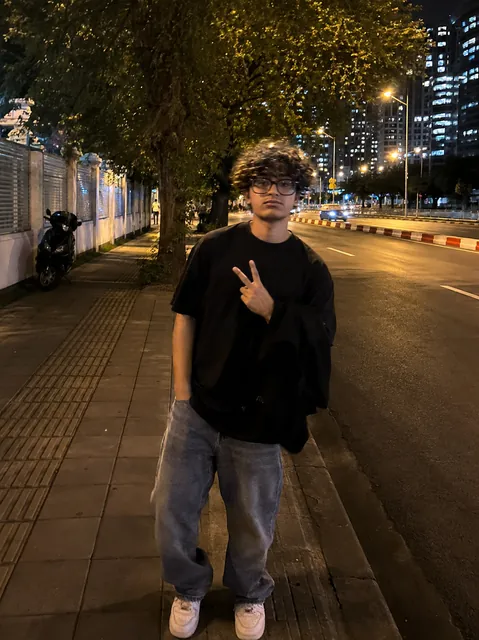
Samiel standing on a city street at night
02 / ATLANTA
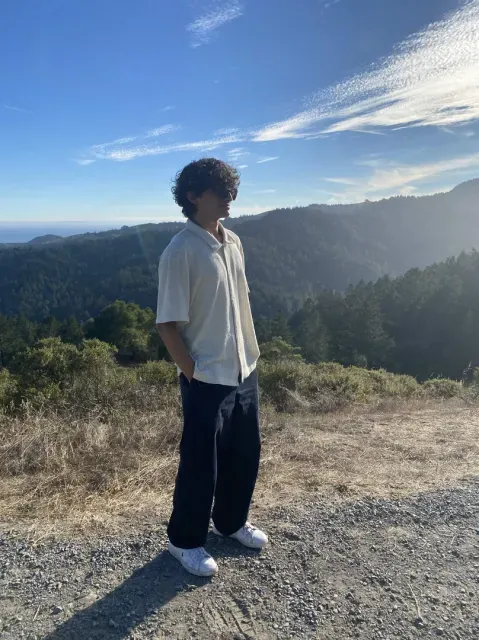
Samiel standing on a mountain ridge in daylight
03 / YOSEMITE
Samiel standing beneath a streetlamp at night
04 / SAN JOSE
Samiel walking through a crowded outdoor event at night
05 / DUBS IN 6
Samiel on a trail beneath the Hollywood sign
NOW_06 / HOLLYWOOD
Samiel beside a lagoon and illuminated arches at blue hour
07 / SAN FRANCISCO
Samiel visiting a temple complex in Japan
08 / TOKYO
CURRENT_SIGNAL.LOG STILL IN
PROGRESS.
01 / 05

Project index

Use the PSP controls to view five different projects, and look at the case files below for the whole story.

CURRENT COLLABORATION REC

01 / 05   AGENT IDENTITY

Totem

↗

3D hardware: Sony PSP by Ilya Ostrovsky, CC BY 4.0.

02 / WORK ARCHIVE

Work log.

Projects and experience in one trace. Expand any case file for the full story.

01

CEO / AGENT IDENTITY

Totem

A network where AI agents from different platforms, users, and organizations can communicate and work together.

My contribution

I lead the product and customer discovery. I help companies choose which workflows we will initially support and define success criteria of the test.

The hard part

As agents operate in different companies, each request involves a different set of permissions. We tie the agent’s proof to the company receiving the request and to the particular request itself. In case the permission runs out of time or is revoked, the next check must deny access even if an earlier request succeeded.

What I learned

We start building our network by helping two companies conduct one useful interaction. The early discussions made it easier for me to focus on this: find the recipient of the request, give an example based on his real job and decide which requests must succeed and which must fail.

Current progress

I was selected for Entrepreneurs First's Selection Day. We have paid pilots running and are talking to a16z, Founders Inc. Blueprint, Alliance (ALL19) and Drive Capital.

  • Agent identity
  • Authorization
  • Protocol design
  • Security UX
02

RESEARCH / GPU MEMORY SYSTEMS

GPU–HBM Predictive Caching

A predictive memory-controller concept that involves learning block access transitions using a Markov chain, verifying those predictions with a neural network, and applying quantization and pruning techniques to ensure a lightweight predictor.

My contribution

I co-developed the ISEF research project, designed the predictive caching approach and experiments, and later I was the sole author of the journal article based on that work. I'm also a co-inventor of the patent for the GPU project.

The hard part

A predictor may end up negating its own advantage if inference cost and memory cost are too high. Thus, I had to take model compression, prediction accuracy, and transfer time as one systems issue rather than three different performance metrics.

What I learned

A system's contribution is convincing only if the benchmark and simulation assumptions and the artifact set are clearly laid out. Thus, the public repository distinguishes between the publication record and reproducibility package.

Result / status

The paper claims 85% L1 cache hit rate, 40% reduction in memory cost, and 25% improvement in data transfer rate. The work was presented at the Georgia Science and Engineering Fair where it placed first place for all categories and placed as a finalist in Regeneron ISEF. It was published in IJSCE in January 2026 and resulted in a granted patent.

  • Markov chains
  • Neural networks
  • Quantization
  • Pruning
  • GPU architecture
03

PUBLISHED RESEARCH / RESPONSIBLE ML

FND MRI Classification

A research prototype to determine if tabular features extracted from MRIs could differentiate neurological disorder and Functional Neurological Disorder.

My contribution

I developed the tabular features pipeline, trained logistic regression and dense network baselines using two hidden layers, computed metrics and figures, and described the process in the accompanying manuscript.

The hard part

The public data sample is tiny and does not replicate the bigger experiment performed for the paper. The critical point was distinguishing an exploratory research finding from one that could be perceived as clinical validation.

What I learned

In medicine, machine learning models require splits that do not depend on the patients, provenance, baselines, confidence intervals, and error analysis before accuracy becomes relevant. A limitation described explicitly is better than a metric with no context.

Result / status

I published the paper in the International Journal of Advanced Pharmaceutical Sciences and Research in 2024.

  • Python
  • scikit-learn
  • Dense neural nets
  • ROC–AUC
  • Responsible ML
04

DATA SCIENCE / GEOSPATIAL ANALYSIS

Swing-State Probabilities

An exploratory analysis of the 2020-2024 elections mapping transparent swing scores in precincts throughout Gwinnett County.

My contribution

I created the Jupyter workflow for data preprocessing, regression models experimentation, sigmoid score calculations, and visualization in rasters, which I documented in a 34-page development logbook.

The hard part

There was no clean schema or reproducible pathing between election tables, precinct geography information, and files stored on Google Colab. I needed to be careful not to present the score as an estimate.

What I learned

The cleaner and more professional a map looks, the less care it takes in the methodology. It is just as important to have reproducible inputs, independent labels, train/test split, and clear language as a good model.

Result / status

The notebooks and full logbook are available publicly. The code is labeled as exploratory and the data/environment/validation needed for a reproducible release are clearly stated in the repository. This research won 1st place at the Georgia State Leadership Conference hosted by TSA.

  • pandas
  • GeoPandas
  • Rasterio
  • TensorFlow
  • Jupyter
05

CONCLUDED / HACKLANTA 2026

Andromeda

A four-person Hacklanta prototype investigating ways of making the information generated by prediction markets usable as research signals, paper trade workflows, and strategy experimentation.

My contribution

As part of the four-person team, I helped create and release a browser prototype combining market visualization, probability-based analytics, paper trades, and strategy testing. I am currently responsible for the public documentation of the project.

The hard part

Prediction markets evolve rapidly, hence the need to communicate uncertainty and avoid any false perception of certainty or real financial advice. In addition, team ownership meant respecting the limit around the private source code repository.

What I learned

Projects in fast-moving teams require clarity on ownership, provenance, and lifecycle. It should be possible to archive the work without misleading about ownership of the implementation or product status.

Result / status

The public front-end is still available as a portfolio item. Andromeda is finished; operations requiring back-end might not be available anymore, and the archive does not include any source code of the team.

  • Prediction markets
  • Paper trading
  • Team prototype
  • Product UX
EXPERIENCE TRACE

Where I worked.

Research, operating context, and the teams behind the work.

Anthropic

Post-training Evaluator

Execute preference-data and code-evaluation workflows across reasoning, instruction fidelity, calibration, and failure-mode analysis; author adversarial tasks, rubric-aligned rankings, golden patches, and technical rationales for model-improvement pipelines.

Totem

CEO

Building an agent-native identity and authorization platform that binds organizational representation and current authority to each cross-company request.

Amazon Web Services

Software Engineer Intern

Authored the HLD for a Unified Search MCP service spanning IAM/SigV4 authentication, FastMCP tools, API Gateway and Lambda routing, provider mapping, normalized results, observability, and beta tests.

Lattice Science Publication

Publisher & Editorial Board Member

Published research on FND MRI analysis and GPU-HBM predictive caching, established an h-index of 1, and contributed editorial review work.

Georgia Tech Aerospace Research Program

Researcher, Dr. Kelly Griendling Lab

Developed modular planetary-rover concepts for habitability analysis using soil, air, and magnetic-field sensing across design, simulation, testing, and research communication.

Singareddy Information Technologies

Software Developer Intern

Built Spring Boot REST APIs, PostgreSQL workflows, React components, and SMTP features; improved interface efficiency by 15.4% and completed seven Oracle Cloud certifications.

03 / TOOLKIT

Full-stack,
but systems-first.

Systems & data

AWS, Lambda, API Gateway, IAM/SigV4, FastMCP, REST, Spring Boot, PostgreSQL, Supabase, OpenSearch, Docker

Quant & ML

PyTorch, NumPy, pandas, scikit-learn, probability, time series, backtesting, Markov chains

Languages

Python, Java, C++, C, TypeScript, JavaScript, SQL, Bash, Git

04 / OFFICE HOURS

Bring a hard problem.

Book a private working sessions for architecture decision, research direction, portfolio review or early-stage product issue. Payments and scheduling are guaranteed through Stripe + Calendly.

GOOGLE MEET EASTERN TIME PAYMENT REQUIRED
SESSION_CONFIG.exe LIVE
SELECTED_SESSION

Focused 1:1

A scoped working conversation with direct feedback and concrete next steps.

$150 / 30 MIN
PAY & BOOK ↗
SYS / COMMAND INDEX
READY

↑↓ NAVIGATE   ENTER EXECUTE   ESC CLOSE